
Sustainability
TOP > Sustainability > Visualization of CO2 emissions
GHG Emissions Management in the Steel Supply Chain
Our Approach
Visualization of CO2 emissions
The Sumitomo Corporation Group has identified “Overcoming Climate Change” as one of its six
material issues and has been advancing initiatives to reduce greenhouse gas (GHG) emissions across its
operations.
As part of this commitment, the Group has set a long-term goal of achieving carbon neutrality in its
business operations by 2050.
In February 2026, following the completion of Scope 3 emissions calculations for the entire Group and in
anticipation of the application of the Sustainability Standards Board of Japan (SSBJ) disclosure standards,
the Group updated its emissions reduction targets to align with the categorization framework of the GHG
Protocol.
Using FY2024 as the baseline year, the Group aims to:
・Reduce emissions by 30% by FY2035, and
・Achieve carbon neutrality by 2050
across the following categories:
・Scope 1
・Scope 2
・Scope 3 (Category 13 and Category 15)
As a member of the Sumitomo Corporation Group, Sumitomo Corporation Global Metals Co., Ltd. (SCGM Group) is
actively working to measure and manage emissions across the steel value chain.
Since 2021, the SCGM Group has been working to establish a GHG emissions inventory for the steel supply
chain, while also advancing initiatives such as:
・reducing Scope 1 and Scope 2 emissions within its own operations
・utilizing carbon credits to offset operational emissions
・improving the accuracy and transparency of Scope 3 emissions calculations
Through these initiatives, the Group aims to contribute to the decarbonization of the steel industry, which
is widely recognized as one of the most emissions-intensive sectors globally.
FY2024 GHG Emissions
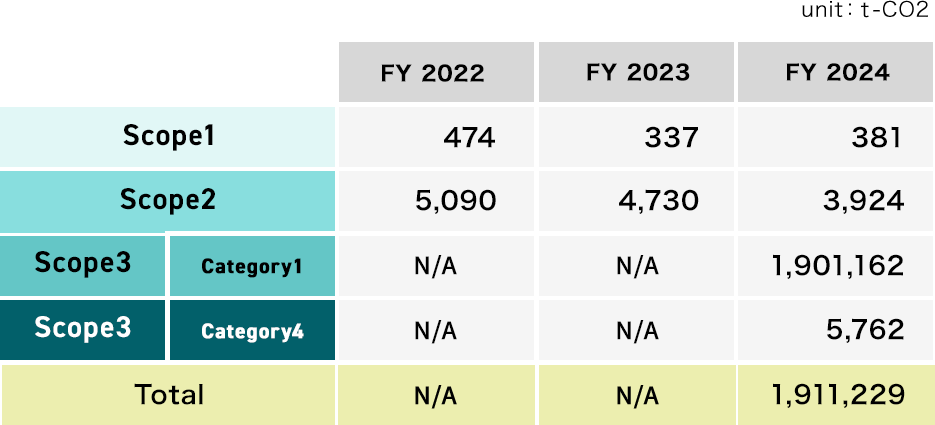
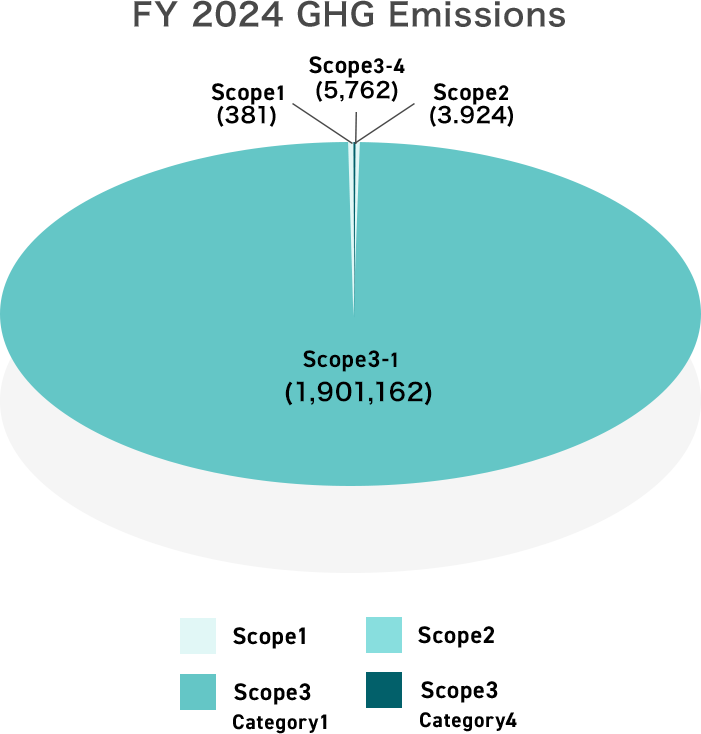
Total GHG emissions of the SCGM Group for FY2024 amounted to:1,911,242 t-CO₂
(Scope 1, Scope 2, and Scope 3 – Category 1 and Category 4)
For Scope 1 and Scope 2 emissions attributable to SCGM on a standalone basis, the company purchases and
retires carbon credits equivalent to the emissions generated. However, the figures disclosed here do not
deduct the volume offset by these credits, to ensure transparency.
More than 99% of total emissions fall under Scope 3 Category 1, which represents emissions embedded in
purchased goods and services.
These emissions primarily arise upstream in the steel production process and therefore lie largely outside
the direct operational control of the SCGM Group.
As a company engaged in global steel distribution, SCGM recognizes the importance of quantifying and
visualizing emissions throughout the supply chain. Establishing visibility over supply chain emissions is a
critical first step in supporting the steel industry’s transition toward lower-carbon production
pathways.
At the same time, demand for low-carbon and green steel products has begun to emerge in certain markets. The
SCGM Group believes that facilitating the distribution and wider adoption of such products will play an
important role in accelerating decarbonization across the steel value chain.
Previously, Scope 3 emissions were calculated based on an internally developed methodology, and the
results were subject to independent third-party assurance by KPMG AZSA Sustainability Co., Ltd.
However, as Sumitomo Corporation has now completed the development of a unified GHG accounting
framework and begun disclosing emissions data for the entire Group, the SCGM Group has aligned its
calculation scope and methodology with those used by Sumitomo Corporation beginning in FY2024.
As a result of this transition, Scope 3 emissions data for prior years are indicated as N/A due to
differences in calculation boundaries and methodologies.
Sumitomo Corporation obtains independent third-party assurance for its emissions data as
follows:
Scope 1 and Scope 2:KPMG AZSA Sustainability Co., Ltd.
Scope 3:SOCOTEC Certification Japan Co., Ltd.
Further information can be found on the Sumitomo Corporation sustainability website.
Environmental-related data | ESG Data | Sustainability | Sumitomo
Corporation
-
Data Boundary
The organizational boundary for emissions data collection is defined as follows:
Scope 1:SCGM (standalone) and four consolidated subsidiaries
Scope 2:SCGM (standalone) and four consolidated subsidiaries
Scope 3- Category 1:Procurement volumes associated with proprietary trading transactions conducted by SCGM and its four consolidated subsidiaries
Scope 3 -Category 4:Transportation arranged by the SCGM Group in proprietary trading transactions, including land and ocean transport from domestic steel manufacturers to overseas ports of discharge.
Transportation cases with estimated annual emissions of 500 t-CO₂ or less per shipment are excluded from the calculation. -
Calculation Methodology
Scope 1 and Scope 2
Scope 1 and Scope 2 emissions are calculated by multiplying energy consumption at each operational site by the relevant CO₂ emission factors.
Energy consumption is determined based on purchased volumes of the following energy sources:
・Electricity
・Chilled and hot water
・Gas
・Kerosene
・Diesel fuel
・Gasoline
For certain locations, gasoline consumption is estimated using either:
purchase expenditure and national average gasoline prices, or travel distance and average fuel efficiency.
Emission Factor Sources
Scope 1
Domestic and overseas operations
Emission factors from the Ministry of the Environment of Japan’s Calculation, Reporting and Disclosure System Scope 2
Electricity emission factors:
SCGM (standalone) FY2024: Supplier-specific basic emission factors (adjusted for non-fossil energy sources)
FY2021–FY2023: Adjusted emission factors Domestic consolidated subsidiaries
Average emission factor for all power sources (receiving-end basis) Overseas operations
Country-specific emission factors published by the International Energy Agency (IEA) Emission factors for non-electricity energy sources are based on the Greenhouse Gas Accounting and Reporting Manual issued by the Ministry of the Environment.Scope 3
Category 1 – Purchased Goods and Services
Emissions are calculated as:
Procurement volume × emission factor
For certain products from domestic steel manufacturers, emission factors are derived from Environmental Product Declaration (EPD) data published by the Sustainable Management Promotion Organization of Japan. Where such data is unavailable, including for some domestic and overseas steel products, emission factors from the World Steel Association Sustainability Indicators 2024 report (BF-BOF route) are applied.
Category 4 – Upstream Transportation and Distribution
Emissions are calculated as:
Procurement volume × emission factor by transportation mode
Emission factors are based on the UK Government GHG Conversion Factors for Company Reporting.
Looking Ahead
Since its establishment in 2003, the SCGM Group has operated in a rapidly evolving global market with a
spirit of innovation and a commitment to creating new value through the steel business.
Climate change mitigation represents one of the most pressing global challenges, and the steel sector is
widely recognized as a hard-to-abate industry with significant decarbonization challenges.
As a global steel trading and distribution group, SCGM is committed to:advancing decarbonization within
its own operations, and supporting the transition of the steel industry by facilitating the global
distribution of low-carbon steel products.
By collaborating with steel manufacturers and responding to emerging demand for lower-carbon materials
worldwide, the SCGM Group aims to contribute to the industry-wide transition toward carbon
neutrality.
Looking ahead, we will continue to respond proactively to societal change and work together with our
customers, business partners, and all stakeholders to create sustainable value and contribute to the
realization of a more sustainable society.